


© dimeto GmbH
Rethinking efficient building tempering: Digital twin of a low-ex thermal wall
CHALLENGE #1
How can the functioning of a low-ex thermal wall be clearly visualised in order to clarify technical processes and support planning and decisions?
CHALLENGE #2
How can current and future data sources (e.g. sensor data or simulations) be integrated into a digital twin in order to present them clearly and make them usable for practical decisions?
CHALLENGE #3
How to develop an intuitive 3D model suitable for demonstrations and later AI applications?
About the project
Project objectives
The main objective of the project is to visualise the LowEx thermal wall of the University of Saarland as an interactive digital twin and thus its to be done.
More specifically, the project aims to:
- Visualisation of a low-ex thermal wall
- Creation of a prototype Digital Twin
- Development of a table or large model
- Porting to appropriate terminal equipment
The prototype should be expandable to integrate and visualise sensor data, simulations or AI services at a later stage.
Baseline
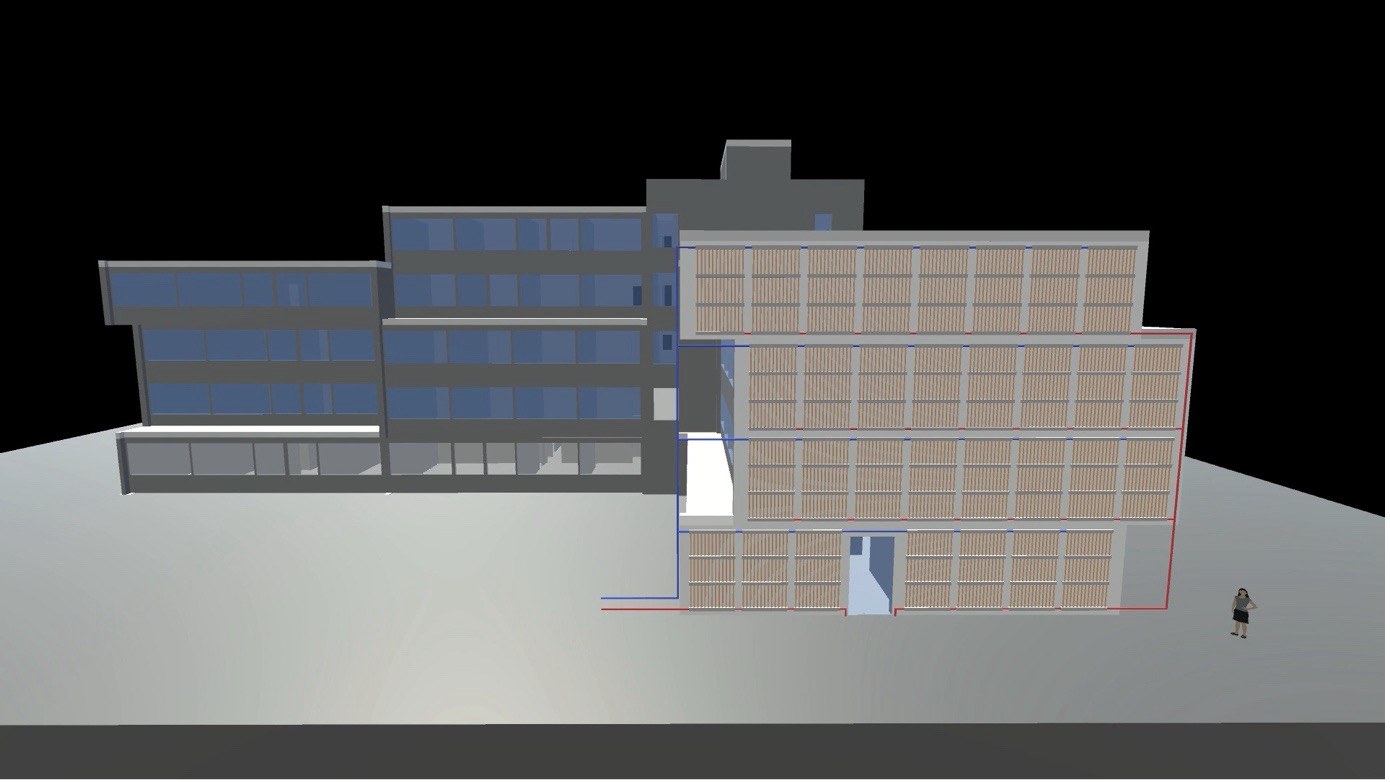
The campus of the University of Saarland houses an office building equipped with an innovative low-ex thermal wall. To this end, the external façade was crushed in such a way that heating pipes could be installed in the façade in a similar way to a floor heating system. These heating pipes were finally insulated. The building is now heated by the concrete wall. The concrete wall itself acts as a thermal reservoir, but it cannot be checked; the thermal energy stored in the concrete wall is permanently discharged into the room. If the concrete wall contains too much thermal energy, office space can be overheated. The company dimeto wants to visualise this heat wall as a digital twin in order to understand its functioning and prepare future AI measures.
The project will provide solutions to the following key issues:
- Use Cases: Who are the potential users of this application?
- Data integration: What data will be available in the future? Can these data be usefully visualised? What data does a user want to see? What data does a user need?
- Visualisation of the model and interaction with the model: How big should the model be in visualisation? What visualisation options are available? In which application scenarios is visualisation more appropriate?
- Visualisation of data and interaction with data: How can the data be usefully visualised?
DESCRIPTION OF COMPANY
Cooperation with the Saarland EDIH is extremely valuable to us. In this project in particular, the visualisation of low-ex thermal walls as digital twin – combined with the use of AR/VR spectacles – is an outstanding tool for projection and planning. It allows for a precise scaling of future projects, improves decisions from the early stages of projects and creates significant added value for our business.
Dominik Schön
Managing Director dimeto GmbH

Approach
Initially, technical foundations, existing drawings and the need for AR/VR/MR visualisation were analysed. An on-site inspection was carried out in order to record the building conditions.
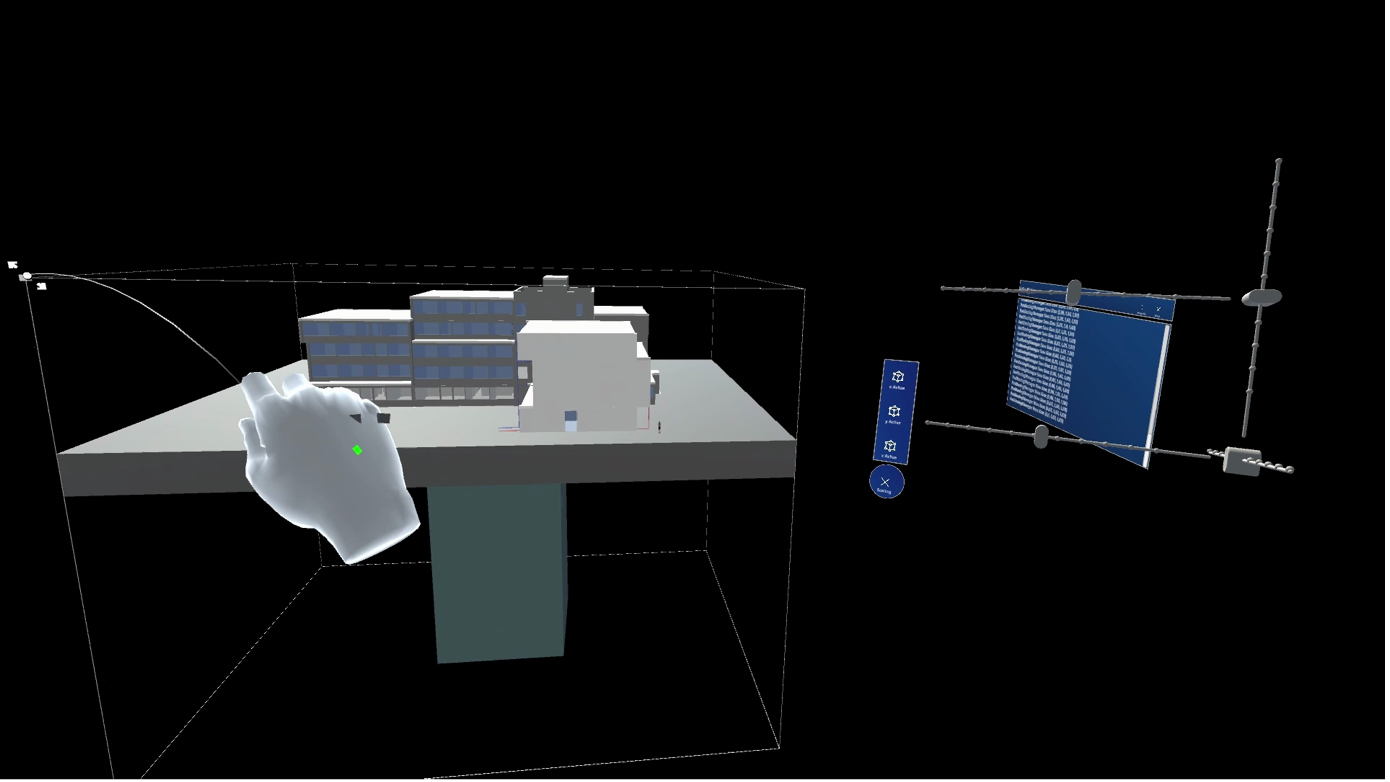
This was followed by a feasibility study, a business process analysis, the creation of a 3D model in blenders, and the combination of the model with existing interaction and visualisation modules. Through regular consultations, the prototype was gradually developed.
Result of the project
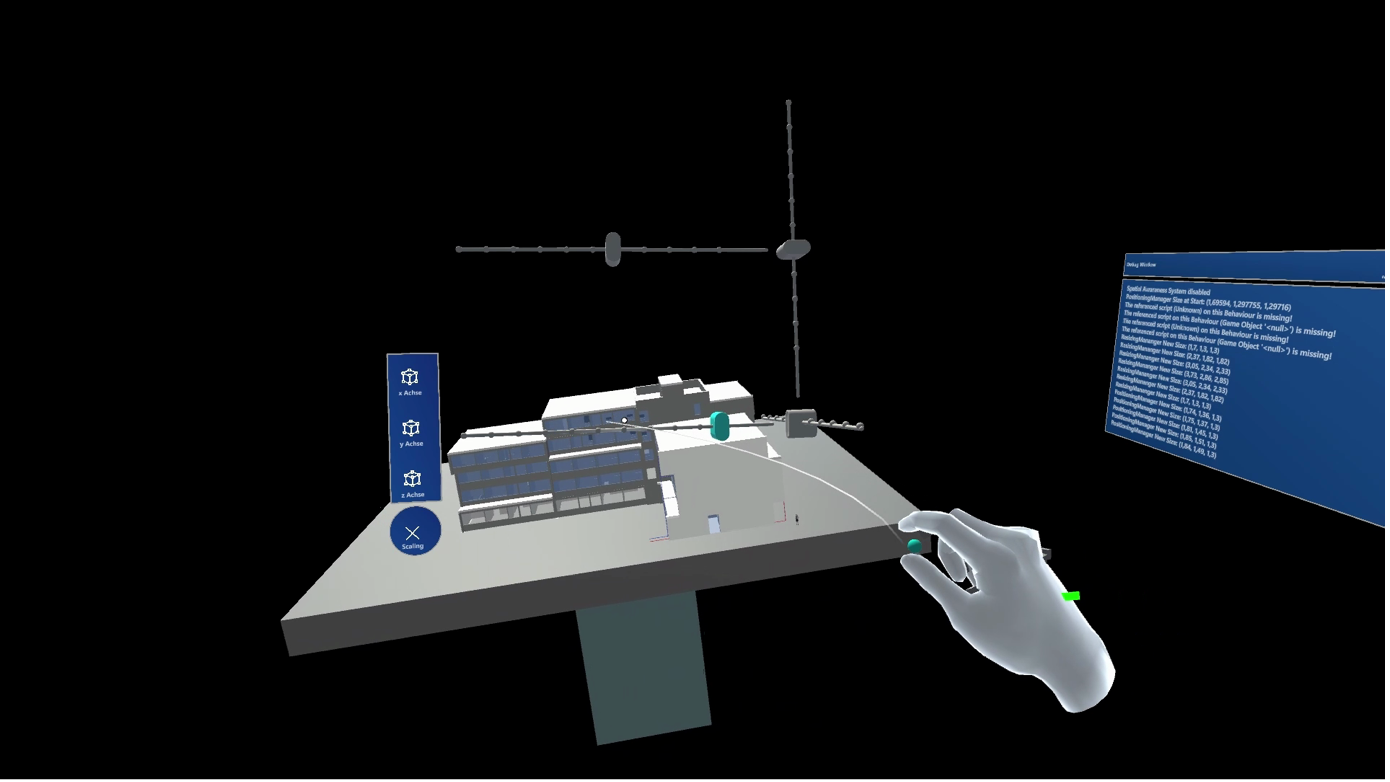
The project resulted in a 3D visualisation of the digital twin of the thermal wall. The model can be adapted in size, position and orientation by voice command. Instructions such as ‘switching to’ and ‘switching to’ were carried out for the thermal wall itself.
Possible evolution
On the basis of the prototype, a system could be created that automatically records building dimensions or window positions, thereby supporting or automating the planning of low-ex thermal walls. Simulations could be used to test the thermal behaviour virtually.
Main lessons learned from the project
This is what dimeto says about cooperation with the Saarland EDIH
Cooperation with the Saarland EDIH is a win-win for us:
The digital twin of the LowEx thermal wall – supported by AR/VR – optimises planning, enables accurate scaling and speeds up decisions.
Real added value!